The Echoes of War
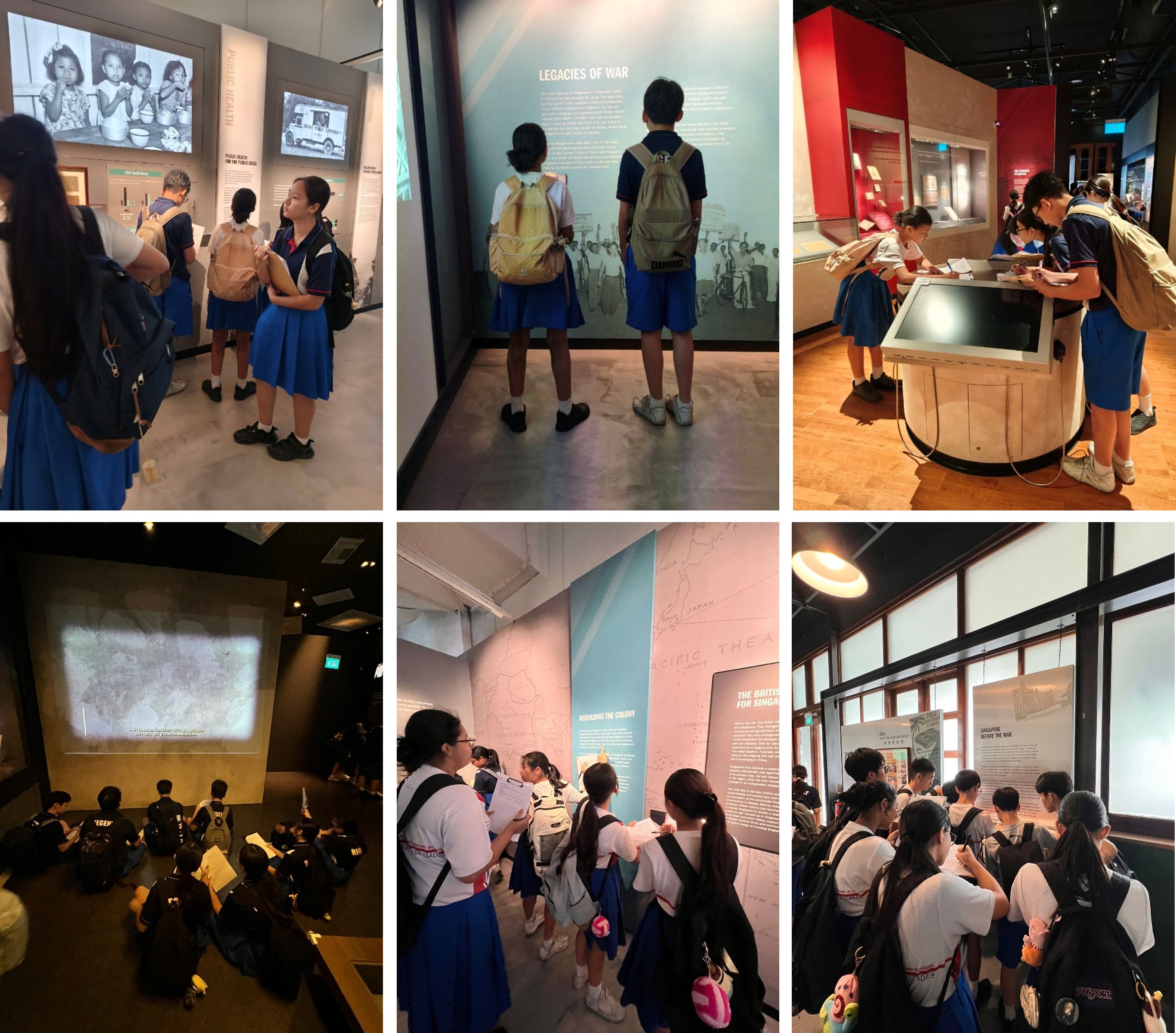
History came alive for our Secondary 2 students through The Echoes of War Programme, an immersive learning journey to The Former Ford Factory held on 24 March, 26 March, and 2 April. Designed to support the Historical Investigation (HI) component of the Secondary 2 History syllabus, the exploration of various historical exhibits moved beyond the confines of the classroom and into authentic historical settings. Through close engagement with artefacts and firsthand accounts, our students were given the rare opportunity to conduct primary research and interact directly with historical evidence, deepening their understanding of the past in a meaningful and memorable way.
Our students were provided with some guiding questions to spark their curiosity and encourage critical thinking. These questions served as a roadmap for their investigation. The learning journey was divided into three themes. The first was Japanese Motivations and the British Surrender. Our students examined the strategic and economic reasons behind Japan’s expansion into Southeast Asia to understand the broader geopolitical causes of the conflict. Through primary artefacts—such as chairs once used by historical figures like Generals Tomoyuki Yamashita and Arthur Percival—as well as archival video footage, the programme brought the Fall of Singapore to life.
The second theme was the Japanese Occupation Experience. Through displays such as a reconstructed prison cell and dynamic edtech exhibits that allowed our students to ‘choose their fate as a Singaporean in Syonan’, this segment made learning history engaging and enjoyable in an authentic setting.
The final theme was Postwar Impacts which analysed the long-term effects of the war on Singapore. This included the physical, social and political changes that occurred during the reconstruction period and the country’s future trajectory. This segment also featured Singaporeans during the postwar period gaining political consciousness and forming the antecedents of an independent nation.
Throughout the programme, our students worked in groups to research historical information and interpret their findings. This collaborative approach encouraged the sharing of ideas and the co-construction of knowledge.
By engaging in hands-on experiences, our students viewed history through the lens of a historian and developed a deeper appreciation of the complexities of Singapore’s past. Ultimately, they gained more than just historical knowledge, as they also strengthened their sense of humanity, resilience and critical thinking.